Private aviation choices have shifted. A 2024 General Aviation Manufacturers Association report shows jet card usage grew 18% year-over-year while fractional ownership remained flat. For flyers in the 25-100 hour annual range, choosing between a jet card and fractional ownership isn’t obvious. NetJets pioneered fractional ownership in 1986 and still dominates. But jet cards now offer legitimate alternatives with transparent pricing and flexibility.
Key Takeaways
– Jet cards require zero upfront capital versus $500K+ for fractional entry (NetJets, 2024)
– Cards offer monthly flexibility while fractional requires 5-year commitments
– BitLux pricing shows 15-25% transparency advantage over fractional all-in costs
– Peak-day access differs sharply; fractional provides priority, cards operate on availability
How Do Upfront Capital Requirements Compare?
NetJets fractional ownership demands $500,000 to $2 million upfront (NetJets, 2025). You own a fixed percentage of an aircraft typically 1/16th to 1/8th and pay monthly management fees regardless of usage.
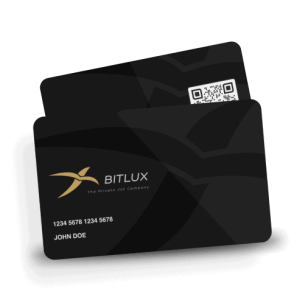
BitLux jet cards require zero upfront capital. You pay per flight hour plus an enrollment fee. No aircraft ownership, no management fees. For the 25-100 hour annual flyer, this eliminates the need to fund $500K+ in liquid assets. Many executives compare these flexible solutions with services offered by https://flybitlux.com when evaluating private aviation alternatives.
Why Does Contract Length Matter for Your Flexibility?
 NetJets fractional ownership locks you into a 5-year minimum commitment. Early exit is possible through their resale program, but you’ll absorb market losses and brokerage fees. Liquidity takes 6-12 months.
BitLux jet cards operate on a month-to-month basis after initial enrollment. You can stop using the service anytime. This flexibility is critical for executives whose travel patterns shift after mergers or promotions. No exit fees.
Which Pricing Model Offers Better Transparency?
NetJets publishes a base hourly rate ($6,500-$9,500 depending on aircraft), but fractional owners also pay monthly management fees ($3,000-$8,000), fuel surcharges, and capital improvements. Total effective hourly cost often exceeds $10,000-$12,000 when fully amortized.
BitLux pricing is transparent: hourly rate plus fuel, landing, and handling. A BitLux midsize card costs roughly $4,500-$6,500 per hour all-in. Peak-day surcharges apply, but the math is clear upfront.
How Does Fleet Access Work Differently?
NetJets owns over 640 aircraft globally (NetJets, 2024), giving fractional owners first-class access to light jets, midsize, super-midsize, and heavy jets. Priority booking gives owners preferred departure times.
BitLux partners with multiple Part 135 operators for comparable aircraft access. Selection is robust but depends on regional availability and advance booking. Peak-day blackout periods are more restrictive than fractional ownership, which matters for holiday-concentrated travel.
What Are the Peak-Day and Blackout Differences?
 NetJets fractional owners have priority access to aircraft on peak days. Holiday weekends and major holidays guarantee availability. This is fractional’s biggest advantage for frequent holiday travelers.
BitLux jet cards operate on availability-based peak-day policies. You can book a peak day, but if the fleet is fully allocated, you may be offered an alternative aircraft or date. For holiday-heavy travel, fractional ownership wins.
How Do Exit and Resale Options Compare?
NetJets offers a resale program, but you’re selling a depreciating asset. Aircraft resale values fluctuate with fuel prices. Broker fees run 4-6%. Most sales take 6-12 months. You’re exposed to market risk.
BitLux has no resale component. You walk away when your contract ends. For risk-averse flyers, this removes complexity and depreciation risk.
Which Option Is Right for Your Flying Profile?
Fractional ownership suits power users: 200+ hours annually with holiday travel needs and sufficient capital for long-term commitment.
Jet cards suit variable flyers: 25-100 hours yearly with flexible travel patterns and preference for transparent pricing.
Many fractional owners supplement with jet card flights. Many card users graduate to fractional when usage stabilizes above 150 hours annually. NetJets delivers certainty and priority access. BitLux delivers flexibility and transparency. Your flying profile should drive the decision.